Thursday, March 11, 2010

Skurnik Wines, 2010 Grand Portfolio Tasting


Over 700 wines, 300 wine producers from across the globe and a curious and appreciative band of trade professionals gathered at Michael Skurnik Imports 2010 Grand Portfolio tasting on Wednesday, March 10, in New York City. Yes, this was nirvana. Here's a sampling.

Upon arrival, my first stop was with old friends from Burgundy and the northern Rhone Valley of France. Alexandrine Roy, Domaine Marc Roy, of Gevrey Chambertin presented her stable of villages wines from 2007 and one 2006. Elegance and purity exemplify the work of this dedicated young vignernon. Her 2007 Gevrey-Chambertn “Clos Prieur” received 4 stars in the April issue of Decanter. Bridget Roch, who with her husband, Gilbert Clusel, own the highly regarded Domaine Clusel-Roche in Cote Rotie of the northern Rhone. Gilbert stayed behind to finish pruning. Their wines are superb, particularly the “Grandes-Places.” The 2006 is sleeping in my cellar. I’m on the prowl for the 2007. Next comes Stephane Robert of Domaine Tunnel, who produces quality white wines from St. Peray and brilliant reds from Cornas and St. Joseph. I’ve had the pleasure of visiting Stephane and his wife, Sandrine at their cave in St. Peray. Not only are they making quality wines, but their generosity and graciousness are endearing. Domaine Colin Morey ‘s line-up of white Burgundy premier crus from Meursault, Chassagne-Montrachet and Puligny Montrachet showed charming freshness, purity and a harmonious blend of mineality, apple and pear notes, acidity framed by a touch of oak.

Others from France worth noting are Chateau Pibarnon (Bandol), Chateau Laulerie (Bergerac), Domane Lafond (Rhone), and St. Prefert (Chateauneuf du Pape).

For the past three years, I’ve attended the International Pinot Noir Celebration (IPNC) in Oregon where I’ve come to know many fabulous producers of Pinot Noir from around the world, particularly from Oregon and California. Many were on hand in New York. Failla’s Ehren Jordon is a pure superstar winemaker. His Pinot Noir and Syrah bottlings are produced with genuine French–like style. They are recommended highly. Other California stars included the “fantastique” portfolio of Peter Michael, Chardonnay and Cabernet Sauvignon at its best. The wow wines of Paul Hobbs Kent Rasmussen (long term cellar worthy). Rudy von Strasser of von Strasser winery in Napa was there to fulfill every Cabernet Sauvignon lover’s fantasy.

A strong band of brothers and sisters from Oregon invaded NY. Brickhouse, owned by Doug Tunnell, formerly of CBS news, poured his superb Pinot Noir and Chardonnay. The affable Patricia Green presented her approachable line-up of Pinot Noir. To veterans of IPNC, Patricia is well known for her great t-shirt she sells at her winery. It reads, “Women Taste Better.” Who can argue? Penner-Ash and Cristom were there.

Now, I’ll jump back to the old world…Italy.

Powerful and traditional style Barolos from Domenico Clerico. These classic blockbusters were the stars of the day. Cellar them and forget about them from at least a decade or two. For the impatient, Cavallotto and Marengo offer more approachable gems from Piedmonte. From Montalcino, Alessandra Mililotti Ciacci showcased her charm and quality portfolio. Her Moscali has a solid gathering of Morellino di Scansono, Rosso di Montalcino and outstanding Brunello di Montalcinos.

Finally, there was a surprising discovery from the Iscaro Valley, the northern tip of Italy. Weingut Kofererhof's young winemaker Gunther Kerschlbaumer makes some of the most unique and tasty white wines you will find anywhere. The Kerner varietal was a new one for me. The jasmine and passion fruit aromas were intoxicating. His Riesling, Gewurztraimner, Sylvaner, Pinot Grigo, and Muller-Thurgau were pure delight.

The train is about to pull into Union Station. I need a glass of wine.

Tuesday, March 9, 2010

Thursday, February 25, 2010

The Provençal Classic: Boeuf Daube with an Earthy Rhone Red


Le Lavandou, a Provençal restaurant in my neighborhood in Cleveland Park in Washington, DC, offers no corkage fee on Monday nights. The owner, Florence Devilliers, usually offers a classic French main course. A red wine boeuf daube (beef stew) provided the perfect meal for this cold, wintery night. After several comments on the pics posted on the Crush and Press Facebook Fan page, sharing the recipe for this classic hearty, comfort dish was a must do.

This version is courtesy of Patricia Wells, “The Provence Cookbook.” I’ve had wonderful success with this cookbook along with her many others. She calls this recipe, “Forgotten Red Wine Daube (pronounced like knob)” or Daube au Vin Rouge Oublié. “Forgotten” refers to the two bottles of red wine that have been forgotten in the cellar and are past optimum maturity for drinking. This is not a problem most of us encounter. Any decent red wine would work, but a Rhone is preferred.

With this recipe, exactness is not imperative. Merely follow the technique and experiment with readily available ingredients. No need to worry if you can’t find an ingredient, except for the beef and the red wine (LOL).

Here’s the recipe:

Equipment: A large sieve; a large heavy-duty casserole, preferably enameled cast-iron, with a lid (my 7 ¼ quart Le Creuset round Dutch oven is perfect); a 6-quart past pot fitted with a colander.

6 lbs. of beef, preferably two or three different cuts, cut into 3-ounce cubes.

The marinade:

2 btls. Red wince, southern Rhone preferred

4 fresh or dried bay leaves

½ tsp. freshly grated nutmeg

5 whole cloves

Several sprigs fresh thyme

½ cup Extra Virgin olive oil

3 tbls. Extra Virgin olive oil

Fine sea salt to taste

Freshly ground black pepper

30 shallots, peeled and trimmed

Grated zest of 4 oranges

2 cups of pitted olives

3 tbls coarse sea salt

1 lb. penne pasta

1. In a large shallow bowl, combine the meat and the marinade ingredients. Cover with plastic wrap. Refrigerate for 24-48 hours, turning the meat from time to time. Place the sieve over a bowl. Pour meat into the sieve, reserving the marinade ingredients in the bowl. Discard the bay leaves; cloves, and thyme.

2. In the heavy –duty casserole, heat the oil over moderately high heat until hot but not smoking. Add several pieces of meat and brown them over moderate heat, regulating the heat to avoid scorching the meat. Do not crowd the pan and is patient: Good browning is essential for the meat to retain flavor and moistness. Thoroughly brown the meat on all sides in several batches, about 10 minutes per batch. As each batch is browned, use tongs (to avoid piercing the meat) to transfer the beef to a platter. Immediately season generously with salt and pepper.

3. Return all the meat to the casserole. Add the reserved marinade and cover. Bring just to a simmer over moderate heat. Once the liquid has come to a simmer, reduce the heat to low. Cook, covered, maintaining a very gentle simmer, until the meat is very tender, 3 to 4 hours. Stir from time to time to evenly coat the pieces of meat with the liquid. During the last 30 minutes, add the shallots, orange zest, and olives, and stir them into the mixture. The sauce should be glossy and slightly thick. Taste for season. With a slotted spoon, transfer the pieces of meat, shallots, olives, and orange zest to another large covered casserole, leaving the sauce in the pan.

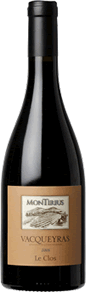
Wine: A hearty red works best, particularly the earthiness of the southern or northern Rhone valley. Châteauneuf-du-Papes, Gigondas, Vacqueyras, Cairanne, Rasteau, Beaumes-des-Venise and Séguret from the southern Rhone and St. Joseph, Crozes Hermitage, Cornas from the northern Rhone are classic choices. I chose Christine and Eric Saurel’s 2004 Domaine Montirius Vacqueyras, “Le Clos” with a 50-50 split of Grenache and Syrah. The aromas exemplify the region’s “garrigues” soil, a French term meaning sun-scorched herbs and earth. Twice I’ve had the good fortune of experiencing their hospitality at their domaine in Vacqueyras. One of my core mantras in life is to buy from nice people only. The Saurels more than qualify and make an outstanding stable of biodynamic wines. Oak is not to be found at the domaine. Their Gigondas and “Le Confidentiel” are stunning.

Saturday, February 20, 2010

My Grandson's First Magnum: 2009 Ridge Monte Bello


On October 20, 2009, my daughter and son-in-law, Lindsay and Clay, gave me the greatest blessing of all, my first grandchild. He's a big boy and carries the mighty name of Sanders Petty Rhodes. As his grandfather, I decided to start his wine collection. My daughter and son-in-law can handle college. I have the fun stuff covered. In my crazy thinking, everyone should have a few or more bottles (magnums,1.5 liters) of outstanding wine from their birth year to have for those special celebrations--graduations, weddings, new job, new promotion, sunsets... And with his hearty laugh can you imagine the delight that he will be around the dinner table.

As Sanders' self-appointed cellarmaster, today, I acquired the futures (delivery in 2011) on a magnum of the 2009 Ridge Vineyards Monte Bello, one of the original classic California Bordeaux blends. Magnums are best for long term purposes because of the juice ages much slower. "Sanders, your collection has begun!" Votre Sante!

With an outstanding vintage in 2009 in France, age worthy treasurers from Burgundy, Bordeaux and the Rhone valley will be on my shopping list as they become available. Now, since I need to be there to enjoy this fine wine with my grandson in 21+ years, I'm off to the gym.


Friday, February 19, 2010

U.S Olive Oil Trade Mission to Tunisia

I am excited to be on this olive oil trade mission to Tunisia.
http://www.thefirstreporter.com/press-release/us-olive-oil-buyers-on-a-mission/

This will be a fabulous opportunity to meet the individual olive oil producers and learn about he culinary heritage of Tunisia. Following my week in Tunisia, I will cross the 62 mile stretch of the Mediterranean Sea to Sicily. From there I plan to work my way north through Italy, then on to France. My itinerary includes stops in Provence, the Rhone Valley, and a few days of visiting many outstanding wine domaines in Burgundy. Of course, the adventure will conclude with a short visit to Paris. There should be an abundance to write about. My new Flip video camera is packed. Please join me for the journey via cyberspace.


Friday, February 5, 2010

More on the Smoke Point of Olive Oil from Richard Gawel

Here's Richard Gawel's comment on a Washington state food writer discouraging her readers to avoid cooking with olive oil. There's no need to include her article. We have enough misinformation circulating as is. As I mentioned in my earlier blog post, Australian Richard Gawel, is an internationally acclaimed researcher, taster, consultant and all around guru regarding olive oil. When he speaks people listen. Moreover he's extremely humorous, never taking himself too seriously.


"Good quality low acidity extra virgin olive oil (EVOO) has a pretty high smoke point, unlike the low quality EU EVOO that people buy at their local supermarket. The olivey flavor of EVOO might not suit what you are trying to do with it, but that's got nothing to do with smoke point. Not many folks know this, but the artificial fat soluble preservatives added to all refined oils (canola, 'olive oil' aka non EVOO, vegetable, flaxseed etc) such as butylated hydroxytoluene and butylated hydroxyanisole add around 15-30F to the smoke point of these oils. Nice if you like eating the stuff. Lastly EVOO doesn't break down any quicker than any other oil with heating. In fact, the natural preservatives called polyphenols that you find in EVOO protect it from heat degradation."


On related point, I asked Richard about the smoke point of refined olive oil. This is the nasty stuff processed with high heat and chemicals from the waste and residue of the pressing of Extra Virgin olive oil. On your supermarket shelf it's often labeled, "Extra Light Olive Oil." Eventually the FDA must stop this labeling. First, "Light" has nothing Extra Virgin. This a total misrepresentation to the consumer.

Here's my question to Richard, "Chefs often state that refined olive oil has a smoke point higher than Extra Virgin. What are the actual facts?"


Richard's response:


"Hi Bill
Yes that certainly is true. By European law, refined olive oils must have a (very low) acidity of no more than 0.03% (as anything more than that suggests that the refining process was incomplete). Anyway low acidity = higher smoke point. Also refined oils have preservatives added to them such as BHT and BHA. These help raise the smoke point of the oil by between 8 and 22C. Obviously extra virgin olive oils are preservative free so they don’t get this artificial leg-up smoke point wise."

For those concerned about preservatives, you might want to consider using high quality Extra Virgin olive oil more frequently.


Wednesday, February 3, 2010

Smoke Point of Olive Oil: Rubbish

Have you heard celebrity chefs tell you not to cook with Extra Virgin olive oil because of its low smoke point? This is rubbish, according Australian olive oil researcher and guru, Richard Gawel. Here are his scientific, fact-based comments on the subject.

http://www.aromadictionary.com/EVOO_blog/?p=147&cpage=1#comment-9

I have written previously that Richard Gawel should be cloned by the olive oil industry. He is a one person truth squad about this magical nectar. Gawel is not alone. Other international researchers are in complete accord with his findings.